
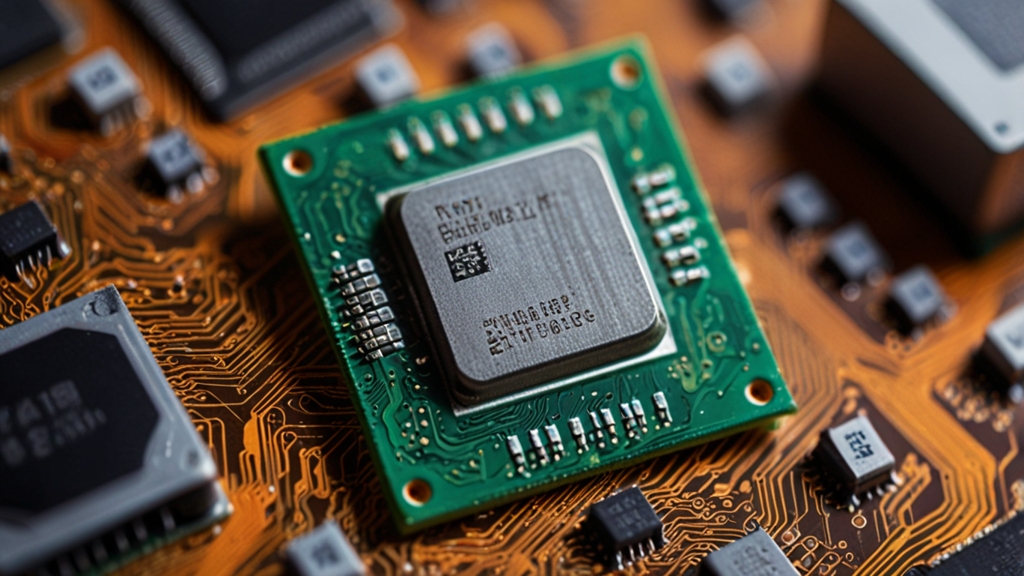
AMD Radeon RX 7800 XT is a powerful mid-range graphics card that deserves attention from both experienced gamers and professionals in three-dimensional graphics. Released in 2023, this graphics card quickly gained popularity due to its optimal balance of performance and price. In this review, we will examine all the key features, performance, and capabilities of the RX 7800 XT in detail to help you make the right decision when choosing a graphics card.
Architecture and Technical Specifications
AMD Radeon RX 7800 XT is built on the RDNA 3 architecture, which represents a significant leap in the development of AMD’s computing capabilities. This graphics card is equipped with 60 compute units (CU), containing a total of 3840 processing threads. The video memory capacity is 16 GB GDDR6, which allows for work with high resolutions and complex textures without reducing performance.
Memory bandwidth reaches 576 GB/sec thanks to a 256-bit bus width. This ensures fast data access and reduces bottlenecks when working with large volumes of information. The base frequency of the graphics processor is 2015 MHz, and the maximum can reach 2505 MHz with automatic overclocking. The power consumption of the graphics card is 250 W, which is a relatively modest figure for this level of performance.
The RDNA 3 architecture includes improved compute blocks optimized for modern workloads. The graphics card supports DirectX 12 Ultimate and OpenGL 4.6 standards, and features built-in hardware blocks for ray tracing and tensor accelerators for machine learning operations. This makes the RX 7800 XT a versatile solution for various graphics processing and computing tasks.
Gaming Performance
The performance of the RX 7800 XT in modern gaming titles is impressive in its stability and power. At 1440p resolution, the graphics card delivers stable results exceeding 100 frames per second in most modern AAA games with maximum or near-maximum graphics settings. In many cases, the device is capable of providing comfortable gameplay even in 4K mode, although this will require some reduction in detail or use of dynamic resolution scaling technologies.
In demanding games such as Cyberpunk 2077, Alan Wake 2, and Starfield, the graphics card demonstrates reasonable performance even with ray tracing enabled. The data processing speed allows it to maintain frame rates at 60-80 FPS in 1440p with maximum settings and medium-level rays. In less demanding projects, such as Valorant, CS:GO, or Fortnite, the RX 7800 XT easily delivers 144+ FPS and higher.
For detailed information about the graphics card’s performance in various scenarios, it is recommended to visit TechPowerUp, where a comprehensive database of tests is compiled. The graphics card shows a competitive advantage over comparable offerings from NVIDIA thanks to its optimized architecture for working with DirectX 12 and Vulkan APIs. Additionally, with 16 GB of VRAM, the graphics card handles modern game requirements better, as these increasingly consume more video memory.
Cooling System and Design
AMD Radeon RX 7800 XT is available in various versions from different manufacturers, each offering its own cooling solution. The reference model from AMD uses a triple-fan design with an effective heat dissipation system. The fans feature an asymmetrical blade design that promotes better air circulation and reduces operating noise. The cooling system maintains the GPU temperature at around 70-75 degrees Celsius under full load.
Custom versions from ASUS, MSI, Sapphire, and other manufacturers often offer improved cooling options with increased numbers of heat pipes, larger radiators, and optimized fan speed profiles. Many of these versions have a minimum fan rotation speed of 0 RPM under light loads, making the graphics card virtually silent during normal browser use or video playback. The graphics card’s dimensions require three-slot space in the case, which should be considered when planning your system configuration.
The cooling design includes multiple layers of protection: an aluminum radiator, copper heat pipes, and professionally applied thermal paste. The substrate for memory and power delivery is protected by a plastic shroud, which prevents condensation and damage from improper installation. The graphics card is powered through two PCI-E 8-pin connectors, ensuring stable power delivery and allowing the graphics processor to operate at maximum frequency without voltage fluctuations.
Capabilities for Work and Content Creation
The RX 7800 XT is an excellent choice not only for gamers but also for professionals working with graphics and video. The graphics card contains a built-in AV1 video encoder, which allows video encoding in this modern format with hardware acceleration. This significantly reduces processing time when working with video material in non-linear video editing programs. Support for three-dimensional modeling, rendering, and image processing applications on AMD has also improved with the new architecture.
For work in Blender, 3ds Max, Maya, and other popular three-dimensional modeling packages, the graphics card offers acceleration through HIP and OpenCL support. The graphics card can significantly reduce rendering time for complex scenes, especially when using ray tracing technologies. The 16 GB of video memory allows you to load large projects and work with high resolutions without needing to offload textures to system memory.
Support for machine learning technologies through the ROCM platform makes this graphics card attractive to researchers and developers working with neural networks. Matrix operations are performed using specialized hardware blocks, providing high performance when working with deep learning models. AMD’s open architecture allows the graphics card to be used in custom computing projects without restrictions that may be imposed by the manufacturer.
Price and Cost of Ownership
AMD Radeon RX 7800 XT offers exceptional value for money in the powerful graphics card segment. At a recommended retail price of around $300-350, this graphics card is substantially cheaper than comparable offerings from NVIDIA. The cost per unit of performance makes the RX 7800 XT one of the best options for users seeking an optimal price-to-performance ratio in its price range.
Economy also manifests itself in power consumption, which is just 250 W. This means that annual electricity costs for operating the graphics card will be significantly lower than more powerful competitors. Additionally, the graphics card is often sold at discounts and special promotions, which can further reduce the final cost of ownership over several years.
The manufacturer warranty typically covers two years, which is standard for electronics of this class. The cost of replacing individual components, such as fans or heat pipes, is low, making it easy to repair the graphics card if necessary. Long-term driver support from AMD ensures that the graphics card will remain relevant and receive optimizations for new games for many years of use.
AMD Radeon RX 7800 XT is a choice for those who value performance, reliability, and economy. This graphics card offers an excellent combination of power and price, making it an ideal solution for both experienced gamers and professionals in digital graphics. If you are considering purchasing a new graphics card in the mid-price range, the RX 7800 XT definitely deserves your attention and serious consideration.