
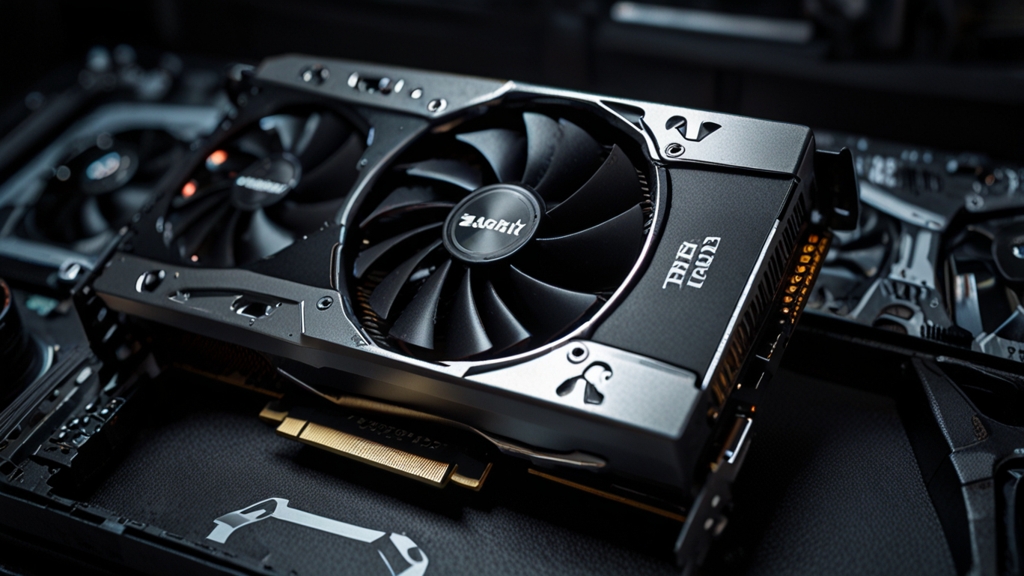
Choosing a graphics card for gaming is one of the most important steps when building or upgrading a gaming PC. In 2025, the graphics card market offers many options, from budget solutions to top-tier flagships, each designed for a specific category of gamers. Understanding the characteristics of the modern GPU market will help you make an optimal choice in accordance with your budget and required performance level.
Determining Target Resolution and Frame Rate
The first and most important step when choosing a graphics card is determining your target screen resolution and desired frames per second (FPS). In 2025, the current resolutions are 1080p (Full HD), 1440p (2K), and 4K (2160p). Each resolution requires different computational power, and understanding this dependency is critical for making the right choice.
For gaming at 1080p resolution with 60-75 FPS, you will need an entry-level graphics card, such as NVIDIA GeForce RTX 4060 or AMD Radeon RX 7600. These solutions provide comfortable gameplay in most modern projects at medium graphics detail levels. If you aim for higher frame rates (120+ FPS), it is recommended to consider more powerful options.
For 1440p, modern games require a mid-range graphics card capable of providing 60-120 FPS. This includes NVIDIA RTX 4070 and RTX 4080 models, as well as AMD Radeon RX 7800 XT. If you plan to play in 4K with maximum graphics settings and frame rates above 60 FPS, you will need to choose between top-tier options — RTX 4090 or specialized graphics cards for professional tasks. It is important to remember that requirements vary for each game, and you should check the recommended system requirements of specific projects before purchasing.
Comparing Manufacturers and Architectures
The graphics card market is dominated by two main manufacturers — NVIDIA and AMD. Each offers different architectures with their own advantages and disadvantages. NVIDIA with the GeForce RTX series (Ada Lovelace architecture in 2025) is traditionally stronger in CUDA optimization and support for modern technologies like DLSS and Ray Tracing. AMD Radeon RX 7000 series (RDNA 3) offers good value for money, although in some cases it lags behind NVIDIA’s proprietary technologies.
NVIDIA’s DLSS (Deep Learning Super Sampling) technology allows significant performance improvements through the use of artificial intelligence for image upscaling. In 2025, this is already a standard feature available in many AAA projects. AMD counters this with its FSR (FidelityFX Super Resolution) technology, which is also becoming increasingly widespread and shows good results, although historically it lagged behind DLSS.
Ray Tracing — ray tracing technology for realistic lighting — is initially better implemented on NVIDIA cards, but AMD is also actively developing support for this feature. When choosing between manufacturers, consider what games you plan to play and what software you may need to use. For professional tasks, it is recommended to check support for the programs you need — NVIDIA often has an advantage in this regard thanks to better optimization for popular applications.
Video Memory Capacity and Bandwidth
Video memory (VRAM) capacity is one of the key parameters of a modern graphics card. In 2025, the minimum standard is considered to be 8 GB of video memory for comfortable gaming at 1440p resolution. For 4K and very demanding games, it is recommended to have 12 GB or more. It is important to understand that a larger memory capacity does not always mean better performance — the type of memory and bandwidth also play an important role.
Memory bandwidth is measured in gigabytes per second and determines the speed of data transmission between the GPU core and memory. Graphics cards with modern GDDR6X or GDDR6 memory interfaces provide high bandwidth, which is especially important when working with high resolutions and detailed graphics. Older interfaces like GDDR5 are gradually becoming outdated and are not recommended for purchase in 2025.
Another important parameter is memory bus width — measured in bits (128-bit, 192-bit, 256-bit, and higher). A wider bus allows more data to be transmitted simultaneously. Budget graphics cards often use a 128-bit bus, while top-tier models are equipped with 384-bit interfaces. When comparing specifications, be sure to look at all these indicators together, not just the video memory capacity.
Cooling and Power Consumption
The graphics card cooling system is critical for stable operation and device longevity. In 2025, most graphics cards come with various cooler options — from modest single-fan solutions to impressive systems with three fans and massive heatsinks. More powerful graphics cards typically have more efficient cooling systems, but their size is correspondingly larger.
Power consumption is another critical aspect that beginners often overlook. Top-tier graphics cards like the RTX 4090 require powerful power supplies (a minimum of 850W is recommended). If you have a 550-650W power supply installed, you should choose less powerful models. Additionally, when operating under load, a powerful graphics card generates a lot of heat, so make sure your PC case provides good air circulation.
Noise is a parameter that affects gaming comfort. Inexpensive graphics cards with less efficient cooling often make significant noise under load. Expensive models with improved coolers operate more quietly due to low fan speeds. If silence is important to you, choose graphics cards with larger and more modern cooling systems that can dissipate heat more efficiently.
Budget and Current Recommendations
Determining your budget is the first practical step before going to the store. In 2025, graphics cards are distributed into the following price categories: budget (up to 15,000 rubles), mid-range (15,000-40,000 rubles), premium (40,000-70,000 rubles), and top-tier (over 70,000 rubles). Each category offers optimal value for money for a specific segment of gamers.
For a budget of 15,000-20,000 rubles, consider the RTX 4060 8GB or RX 7600 XT. If you have 25,000-35,000 rubles, the RTX 4070 or RX 7700 XT would be an excellent choice. For a budget of 50,000+ rubles, you should look at the RTX 4080 or RX 7900 XTX, which provide excellent performance at 1440p and 4K. Remember that prices may vary depending on the region and current market demand. Additionally, it is recommended to check reviews and tests on authoritative computer hardware resources such as TechPowerUp, to get up-to-date information on the performance of specific models.
When choosing a graphics card for gaming in 2025, remember that there is no universal solution that works for everyone. The optimal graphics card depends on your specific requirements for resolution, frame rate, type of games, and available budget. It is recommended to spend time studying comparative tests, reading user reviews, and ensuring that the chosen model is compatible with your system. The right choice of graphics card will provide you with years of comfortable and high-quality gaming without the need for an urgent hardware upgrade.