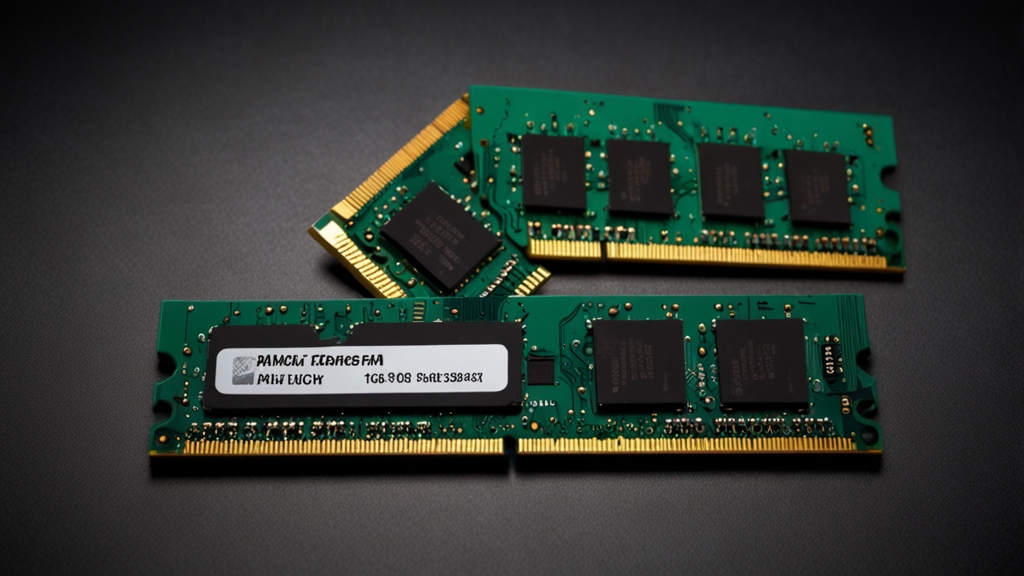
The question of transitioning from DDR4 to DDR5 is becoming increasingly relevant for computer owners in 2025. In recent years, DDR5 RAM has become noticeably cheaper, and support for this standard has expanded to processors from both Intel and AMD. In this article, we’ll figure out whether an upgrade makes sense for various categories of users and what factors to consider when making a decision.
Current market state and DDR5 prices
As of early 2025, the price difference between DDR4 and DDR5 has narrowed to critically low levels. If several years ago DDR5 cost twice as much, now the price for 16GB modules differs by only 10-15 percent. This means that the main argument against switching — memory cost — is no longer convincing for buyers assembling a new computer or performing a significant upgrade.
Manufacturers are actively expanding their DDR5 module offerings with various speeds and capacities. The market features both budget options with frequencies of 4800 MHz and high-performance boards with frequencies of 6000+ MHz. Prices are becoming increasingly competitive, and buyers get better value for money when choosing next-generation memory.
However, it’s worth noting that the cost of upgrading includes not only the memory itself but also a new motherboard, which will be more expensive than LGA1700 for DDR4. If you already have a modern DDR4 system, a complete replacement of components may be economically unjustified in 2025, despite the price reduction for DDR5 itself.
Technical advantages of DDR5 over DDR4
The main advantage of DDR5 is increased bandwidth. While DDR4 operates at frequencies up to 3200-3600 MHz in standard configuration, DDR5 starts at 4800 MHz and can reach 6000+ MHz in high-performance variants. This means that memory bandwidth has increased by approximately 30-50 percent already in the basic version, which positively affects performance in a number of scenarios.
DDR5 also has improved energy efficiency thanks to reduced power supply voltage (1.1V instead of 1.35V for DDR4). This is especially important for laptops and mobile systems where battery capacity is limited. Additionally, the new standard includes built-in voltage regulators on each memory module, which improves stability when overclocking.
We shouldn’t forget that DDR5 supports larger memory capacities on a single module. While the maximum capacity of a single DDR4 module is 32GB, DDR5 already has modules available at 48 and 96GB, opening up new possibilities for professional use and working with large amounts of data.
Performance in real applications
The real performance gain when transitioning from DDR4 to DDR5 depends on the type of tasks performed by the user. In office applications and web browser usage, the difference will be barely noticeable — both types of memory are fast enough for such tasks. Users won’t notice any improvement in everyday work, and the transition won’t be justified for such scenarios.
For content creators and professionals working with video, photo, and 3D graphics, the results are more impressive. When working with large amounts of data and frequent memory access, DDR5 shows an advantage of 5 to 15 percent. In some specialized applications, such as rendering or media content processing, this can translate into real time savings on project completion.
Gamers will see modest frame rate gains — typically 3 to 8 percent depending on resolution and GPU used. This is explained by the fact that the graphics processor remains the bottleneck in most gaming scenarios. However, in future game engines that will be better optimized for DDR5, the difference could become more significant. More details about memory performance can be found at TechPowerUp, where objective tests are regularly published.
Compatibility and development prospects
In 2025, DDR5 compatibility is no longer an issue. Intel 12th generation processors (Alder Lake) and newer support DDR5, as do AMD’s Ryzen 7000 series processors. Virtually all new motherboards come with DDR5 slots, meaning if you’re building a new computer, you won’t have to search for rare boards with support for the old standard.
It’s worth noting that DDR4 will be supported for several more years. Intel continues to release processors with DDR4 support (Core i3, i5 series in some lineups), although the main focus is gradually shifting to DDR5. AMD also didn’t immediately abandon DDR4 support in its processors. This means that upgrading DDR4 systems is not urgent, and you can continue using existing configurations.
Development prospects unequivocally favor DDR5. Memory manufacturers are investing in the new standard, regularly releasing newer, faster modules, and prices will continue to decline. DDR4 is gradually becoming “yesterday’s news” for manufacturers, and in a few years, the selection of DDR4 modules could decrease significantly.
Recommendations for different user categories
For office users and internet browsers, transitioning to DDR5 is not necessary. If your current system works stably and handles all tasks, there’s no point in investing in a complete motherboard, memory, and possibly processor upgrade. Continue using DDR4 until the system actually needs updating.
For gamers, the recommendation is more nuanced. If you’re building a new gaming computer from scratch, choose DDR5 — the price difference is minimal, and future-proofing of your investment is higher. If your current computer is still powerful enough and delivers the needed frame rates, an upgrade can be postponed for a couple of years.
Professionals working with video, photo, 3D, and other resource-intensive content are recommended to switch to DDR5 in the near future. A 5-15 percent performance improvement can translate into real work time savings, which will pay back the cost of upgrading equipment. Additionally, professional tasks often require large amounts of memory, where DDR5 with support for large modules will be a more convenient choice.
In 2025, transitioning from DDR4 to DDR5 is becoming increasingly justified for new configurations but is not a critical upgrade for owners of modern DDR4 systems. The choice depends on your needs, budget, and how intensively you use your computer. If you’re building a new system or already planned a significant upgrade, DDR5 is the right choice. If your current configuration works well, there’s no need to rush.